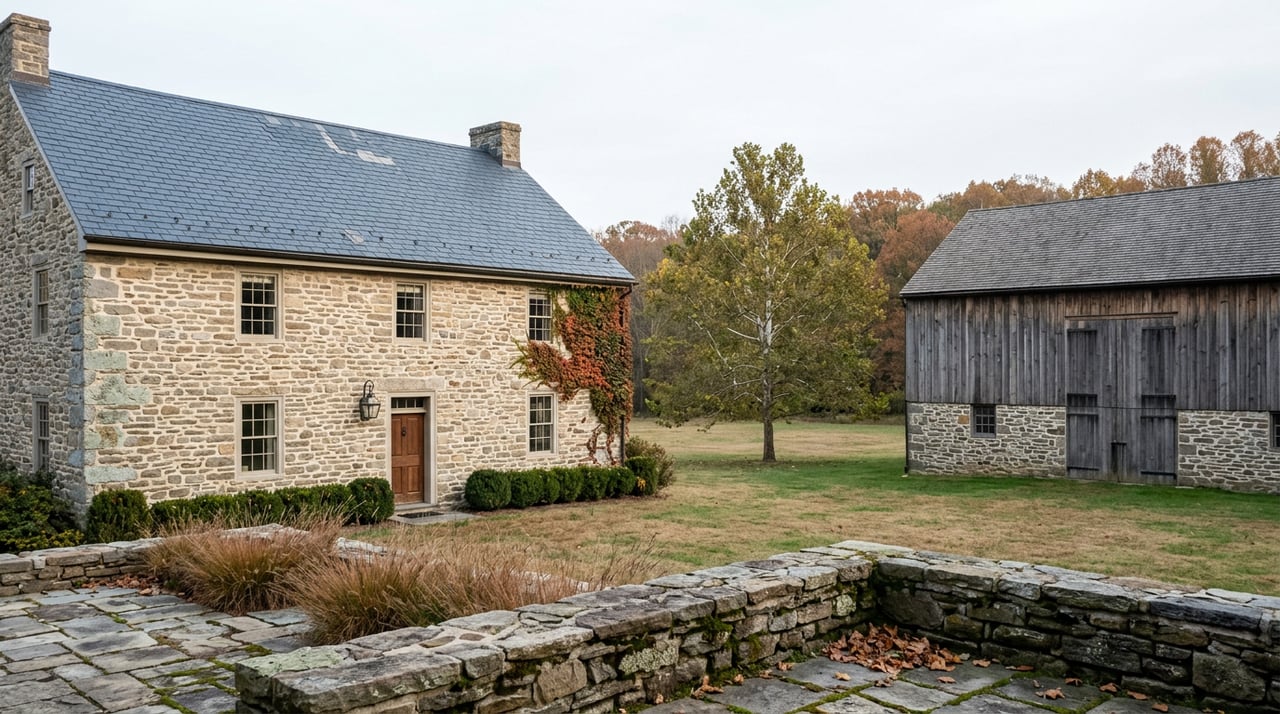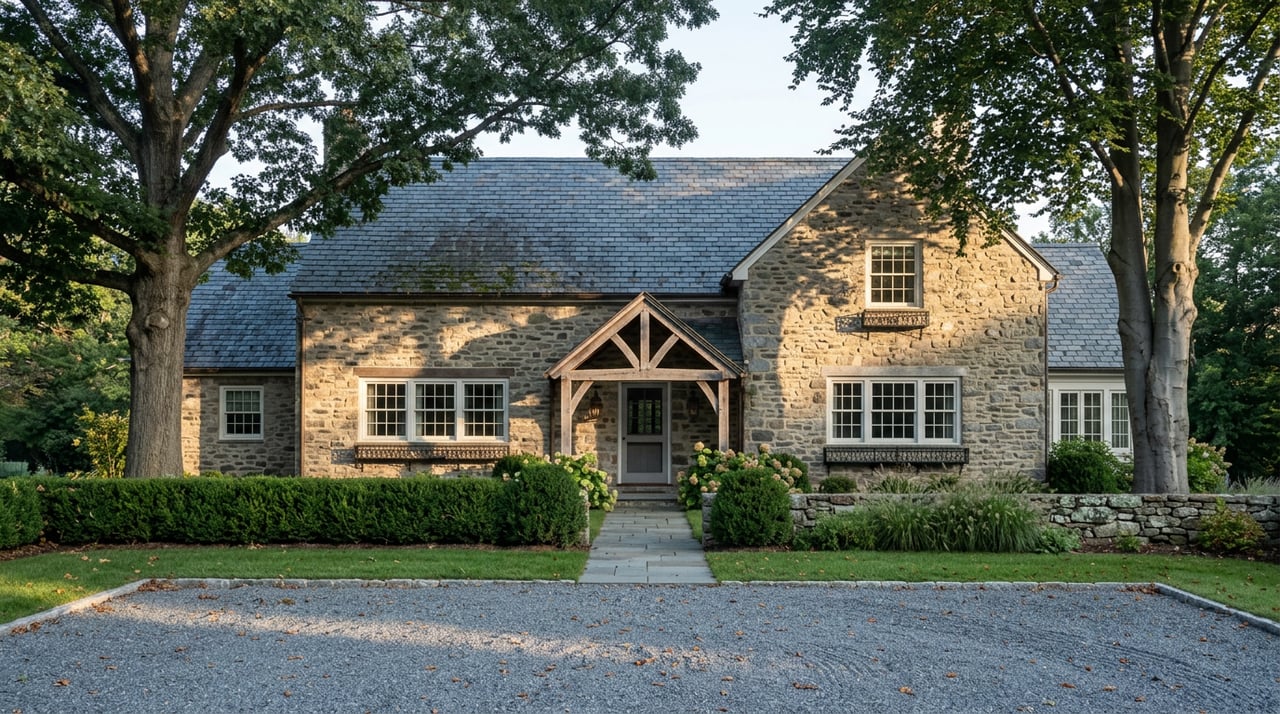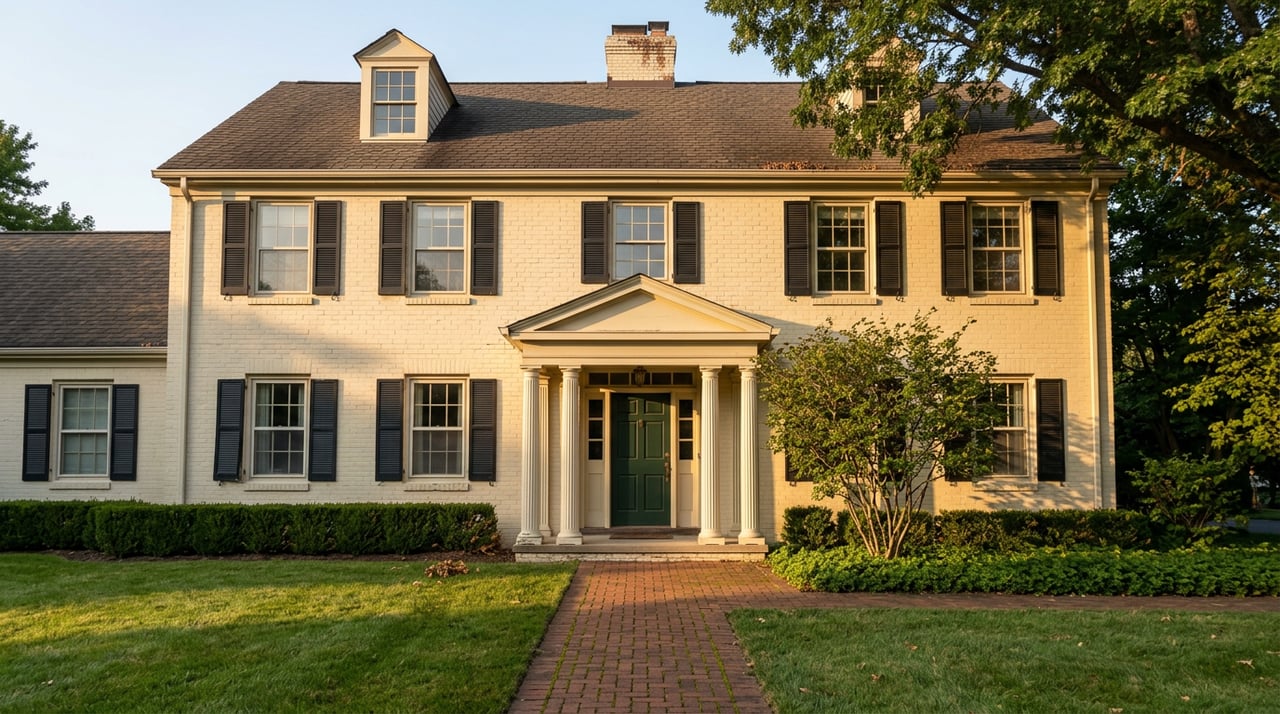
Type "Newtown PA home prices" into a search bar and you will get three different answers depending on which site you land on. One portal will tell you the median is just over a million dollars. Another will put it closer to $1.05 million. A third will show $1.3 million. All three claim to be describing the same place, in the same general window of 2026.
They are not wrong. They are answering a different question than the one you think you are asking. "Newtown" is not one market with one government and one tax bill. It is two separate municipalities that happen to share a name, a school district, and a mailing address, while running two different town halls, two different budgets, and two different tax rates. If you are comparing Newtown to anywhere else on your shortlist, you need to know which Newtown a listing is actually describing before the comparison means anything.
One Name, Two Town Halls
Newtown Borough sits entirely inside Newtown Township, a small walkable core surrounded by a much larger suburban ring. The split is old. In 1838, the commercial center of what had been one township incorporated separately as its own borough, and the two have run independent governments ever since. Newtown Township is governed today by a five-member Board of Supervisors overseeing a full-time township manager. Newtown Borough runs its own council, with its own budget, its own police department, and its own separate contracts for fire and EMS coverage.
The practical result is that "Newtown" on a listing sheet could mean a rowhouse two blocks from State Street inside a roughly one-square-mile borough of about 2,200 to 2,300 residents, or it could mean a colonial on a cul-de-sac in a subdivision like Delancey Court or Newtown Grant, inside a township of nearly 19,900 residents spread across a much larger footprint. Both addresses say Newtown. Both share the same Council Rock School District. Neither shares the same municipal government.
The Part of the Tax Bill That Actually Differs
Most of a Bucks County property tax bill is set by two authorities that do not change based on which side of the borough line you are on. Council Rock School District's millage was 134.4673 for 2026, and Bucks County's millage was 25.45, and both apply identically whether the deed says Borough or Township, according to figures published on the Newtown Township tax department page. That single fact quietly does most of the work in explaining why two houses of similar value in Newtown Borough and Newtown Township land close to each other on a total tax bill, even though their municipal rates look wildly different side by side.
Here is where they diverge:
| Newtown Borough | Newtown Township | |
|---|---|---|
| Approximate population | 2,200 to 2,300 | 19,895 (2020 census) |
| Government structure | Borough Council | 5-member Board of Supervisors |
| 2026 municipal millage | 17.25 per the township tax office's published rate table | 10.115 |
| Shared school millage | Council Rock SD, 134.4673 | Council Rock SD, 134.4673 |
| Shared county millage | Bucks County, 25.45 | Bucks County, 25.45 |
The township tax office lists a different borough figure from the local reports below. The municipal portion of a bill depends on whether the property is in the borough or township; the figures shown here vary by source.
Why Borough Tax-Rate Figures Differ
Local reports and the township tax office publish different figures for the borough's municipal rate. NewtownPANow reported in late December 2025 that the borough's council was holding its municipal tax rate steady at 20.25 mills for 2026, with the average borough homeowner paying $990 to the municipality in 2025, and with the borough projecting $2.2 million in general fund tax revenue against police as its largest single expense at $1.4 million. One week later, a separate Patch report on the borough's formally adopted budget described a five-mill increase for 2026, with three mills tied specifically to a fire services agreement still being negotiated with Newtown Township, a quarter mill directed to Newtown Emergency Medical Services, and the remaining 1.75 mills going to the general fund to cover a new four-year contract for full-time police officers.
The two local reports describe the borough's rate differently, and the township tax office lists the borough at 17.25 mills. One local report describes a steady rate, while the other describes an adopted budget increase. As with home-price data, compare the source and period behind each figure.
The Patch report describes Newtown Township's transition of fire service from volunteer to paid staff and its passing part of that added cost to the borough through their shared fire agreement. Borough Council President Emily Heinz said when the budget details were released in November, as Patch reported:
"We're looking at it from two different angles. We need to support our emergency services, which are critical and whose costs are becoming astronomical, and we need to make sure our general fund is healthy to support our police department."
The reports describe different figures for the borough's 2026 rate and identify the fire-services agreement as a budget factor. Buyers comparing Newtown Borough and Newtown Township should check the current tax worksheet for a specific parcel and ask about the agreement's status, rather than relying on a townwide price comparison.
Three Portals, Three Numbers, One Explanation
The pricing confusion follows the same pattern as the tax confusion. As of April 2026, one portal's snapshot showed a median listing price of $1.12 million for Newtown with 109 homes for sale, a median 25 days on market, and a 100 percent sale-to-list ratio. Another portal's rolling three-month figure through the same period showed a $1,049,458 median sale price with a longer 51-day market time. By June 2026, a third portal's monthly figure put the median sold price at $1,312,500.
None of these numbers is fabricated. Each portal draws its own geographic boundary around "Newtown" and its own time window, and none of them tell you whether that boundary includes the borough, the township, or some blend of both alongside adjacent zip codes. Bucks County's own countywide baseline gives the comparison some grounding. The Bucks County Association of Realtors reported a $546,000 median sold price for May 2026, using data provided by Bright MLS, with 947 active listings giving buyers more room to negotiate than in prior months. Redfin's rolling three-month county figure through May showed $538,000, up 7.5 percent year over year. Against either county figure, Newtown reads as a genuine premium submarket, but the size of that premium depends entirely on which Newtown number you are using to make the comparison.
Even Inside One Newtown, the Number Flattens Real Differences
The confusion does not stop at the borough line. Inside Newtown Township itself, one portal's neighborhood panel showed active inventory clustered unevenly across named pockets: Neshaminy Valley carried 12 active listings while Cobalt Ridge and Forsythia Gate each had 4, and Highland Park, Twin Oaks, and Vermillion Hills each had just 3. Several other pockets showed only 0 to 1 active listing. A single median for "Newtown Township" averages across all of these submarkets as if they behave the same way, when the actual experience of buying in a 12-listing pocket versus a 3-listing pocket is not remotely similar.
What to Actually Verify Before You Compare Newtown to Anywhere Else
If Newtown is on your shortlist, the median price you have already seen is not the number to act on. These are:
- Confirm whether a specific listing sits in Newtown Borough or Newtown Township. The address alone will not tell you.
- Ask for the current millage worksheet for that specific parcel rather than relying on a portal's blended average.
- Ask whether the borough's fire services agreement with the township has been finalized for the current year, since that agreement is actively shaping the borough's municipal rate.
- Look at the specific pocket or subdivision inventory count, not just the townwide figure, since active listings inside Newtown Township range from 12 down to 0 or 1 depending on the pocket.
- Weigh any Newtown-specific median against the Bucks County countywide figure for the same month, since the premium moves depending on which portal and boundary produced the Newtown number in the first place.
None of this changes the character that draws people to Newtown in the first place, the walkable core along State Street, the rated school district, the proximity to Philadelphia and Trenton. It changes how you should read a number before you use it to compare Newtown to Doylestown, Yardley, or anywhere else you are considering. The name on the listing is doing less work than you think. The municipality behind it is doing more.
If you are comparing Newtown Borough and Newtown Township against other Bucks County towns and want the actual tax worksheet and pocket-level inventory for a specific address, Addison Wolfe Real Estate can pull it before you write an offer, not after.
This article is general information, not legal, tax or financial advice. Consult a qualified professional about your situation.